Speech-to-Text in Surveying Right Now and Where It Still Falls Short

Speech to text is becoming part of everyday working life for surveyors.

Most people have tried it.  Some are using it regularly.  In many cases, it is already built into the tools they are using.

On the surface, it feels like a step forward.  You speak, the words appear and a report starts to take shape much more quickly than typing from scratch.

And to be fair, that part is true.

But what we are seeing more and more is this:

The report gets started quickly.  It just does not get finished as quickly as expected.

Where Speech-to-Text Works Well

Speech-to-text is genuinely useful for getting words down.

It works particularly well for:

  • First drafts
  • Site notes
  • Rough report content
  • Emails and internal communication

It removes the blank page problem.  You can talk through what you have seen on site and get it down immediately while it is still fresh.

For a lot of surveyors, that alone is a big improvement.

Where the Time Starts to Go

The part that tends to get underestimated is what happens next.

A speech-to-text report is rarely ready to send.

It usually needs:

  • Structuring
  • Formatting
  • Headings applied
  • Templates followed
  • Spacing corrected
  • Sections moved around
  • Errors picked up and corrected

Individually, none of these things feel like a big job.

Together, they add up.  If you have ever wondered how much time this actually takes, it is worth reading Fee Earner or Typist? to see how quickly it adds up.

We often hear the same thing:

“It was quick to dictate, but then I spent ages sorting it out.”

Templates Are Where It Gets Slower

Most surveying firms do not work from a blank document.

They have:

  • Set report templates
  • Branded layouts
  • Specific structures
  • Required wording in certain sections

Speech-to-text does not handle that particularly well.  This is where working with a specialist transcription servicemakes a noticeable difference, particularly when it comes to formatting structured property reports.

It gives you text but it does not place that text neatly into your template.  It does not structure a dilapidations schedule or a building survey in the way you need it.

So the job becomes:

Copy
Paste
Adjust
Reformat
Check

This is often where more time is lost than expected.

This Is Where We Tend to Come In

What we are seeing now is not a move away from transcription.

It is a shift in how it is used.

A lot of clients are doing exactly this:

  • Using speech-to-text to get a first draft down
  • Sending that draft to us
  • Having it turned into a properly formatted, ready-to-send document

If you want to see how this works in practice, take a look at What Is Audio Transcription for Chartered Surveyors.

It works well that way.

They still get the speed of dictation, but without the time spent formatting and fixing everything afterwards.

It Is Not Just About Typing

There is a difference between having words on a page and having a finished document.

A finished document is:

  • Structured correctly
  • In your template
  • Consistent with your other reports
  • Clear and easy to read
  • Ready to send to a client

That last part matters.

Most surveyors are not short on content.  They are short on time to turn that content into something presentable.

A Practical Way to Use Both

For most people, the best approach is not one or the other.

It is using both in a way that makes sense.

Speech-to-text for:

  • Getting content down quickly
  • Capturing thoughts on site

Professional transcription for:

  • Formatting
  • Structuring
  • Finalising documents
  • Making everything client-ready

That way, you are not doubling up your time.

Final Thought

Speech-to-text is improving and it will continue to improve.  It is a useful tool, especially for getting started.

But reports are not just about getting words down.  They are about producing something accurate, structured and professional.

That final step is usually the part that takes longer than expected.

If that is the bit that keeps getting pushed to the end of the day, or into the evening, it might be the part worth handing over.

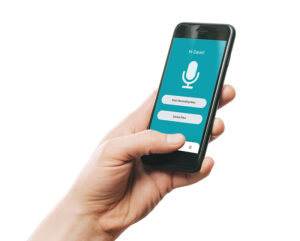
If you want a straightforward way to dictate and have your reports come back ready to send, you can record on your phone and send it directly to us using our dictation app.  We will take care of the formatting, structure and final document so you can focus on your work.

Call us on 020 7096 1663 or email us here.

BackupTyping is a chartered surveying specialist audio transcription and document production company working with a variety of clients from large corporations to small niche companies, all receiving the same high quality and fast service from a team of audio typists who worked at senior levels in chartered surveying organisations. 

Try us instantly with our FREE dictation app!

BackupTyping Dictation App built for clients of our specialist property transcription service to use at no charge or licence. Just dictate and send to us at the touch of a button!

Is Speech-to-Text Accurate Enough for Survey Reports?

Speech-to-text tools are now widely used across many industries.  They are quick, easy to access and, in many cases, already built into the devices people use every day.  On the surface, they seem like an obvious way to speed up report writing.  But when it comes to survey reports, accuracy is what really matters and that is where things need a closer look.

Where Speech-to-Text Works Well

To be fair, speech-to-text does have its place.

It works well for:

  • Quick notes
  • Internal messages
  • Short, informal content

If you are capturing a rough idea or sending a quick update, it can be very useful.  You speak, it types and you move on.

The problem starts when the content becomes more detailed, more technical and more important.

Where Accuracy Becomes a Problem

Survey reports are not simple documents.  They rely on detail, structure and correct terminology and this is where speech-to-text can struggle.

Technical terminology

Property reports are full of specific language.  Terms like “dilapidations”, “cornicing” or “Artex” are not always recognised correctly.

Even when the words are close, they are not always right and in a professional report, close is not good enough.

Numbers and measurements

Numbers are another common issue.

Something like:

  • 15,000 vs 50,000
  • 13 vs 30

can easily be misheard.  These are not small errors. They can completely change a valuation!

Real-world conditions

Most dictation does not happen in a quiet office.

Surveyors are often:

  • On-site
  • Outdoors
  • Moving between locations

Background noise, wind, and distance from the microphone all affect how well speech-to-text performs.  What sounds clear to you does not always translate clearly into text.  We can't always hear it either, but we will give it a very good go!

The Hidden Risk in Survey Reports

The biggest issue is not always obvious mistakes. It is the subtle ones.

A report can look fine at first glance, but when you read it properly, small errors start to appear.  A wrong word here, a missing phrase there. Over time, this affects the overall quality of the document.

Your reports are client-facing.  They represent your work and your professionalism.  Accuracy is not something you can afford to compromise on.

Time Cost vs Time Saved

Speech-to-text is often seen as a time-saving tool.

In reality, the process usually becomes:

  1. Dictate
  2. Read through
  3. Correct errors
  4. Fix formatting

By the time you have finished, the time saving is not always there.

With professional transcription, the process is simpler:

  1. Dictate
  2. Send
  3. Receive a completed document, formatted into your template and ready to send.

The difference is not just speed, it is how much extra work is required afterwards.

If you are weighing up where your time is best spent, it is worth reading Fee Earner or Typist? to see how quickly typing and correcting can add up.

We see quite a few clients using speech-to-text for the first draft and then sending it to us to turn into a properly formatted document.  It works well that way.

A Practical Approach

For many surveyors, the best approach is not choosing one or the other.

Speech-to-text can still be useful for:

  • Quick notes
  • Early drafts
  • Brief emails

But for structured, client-ready reports, professional transcription provides the accuracy and consistency needed.

If you want a clearer picture of how this works in practice, see What Is Audio Transcription for Chartered Surveyors.

Speech-to-text has improved, will continue to improve and can be a useful tool in the right situation, but for reports, where detail, structure and accuracy matter, it is not always enough on its own.

A professionally typed, clear, well-formatted document that is ready to send will always save more time in the long run.

If you want a simple way to dictate and get your reports back ready to use, you can record on your phone and send it directly to us using our dictation app.  We will take care of the typing, formatting and final document so you can focus on your work.  Call us on 020 7096 1663 or email us here.

Professional Transcription Service or DIY?

What is the difference between typing yourself and a ‘professional’?


Also known as 'should I use professional transcription service or Fanny Ann down the road?'

If you learnt to type (on a typewriter – let’s not mention age here) it was considered a real skill as it was a bespoke vocation and not everyone knew how to do this.

With the emergence of computers ‘touch typists’ were in demand, non-typists would look in awe as their fingers quickly passed over a keyboard producing accurate documents at speed.

But with the advancement of technology, everyone now knows their QWERTY from their DVORAK and can find their way around a keyboard at varying speeds, even a two-finger user can probably produce fast words (teenagers these days are probably faster typists on mobile phones than a trained typist).

However, using a keyboard and typing are two different things.

Producing words at a fast speed is completely different from producing a well-formatted document.

Professional Documents

If you just need to type an email then formatting is not an issue but if you need even just a short report (let’s not even think about complex reports – well not just yet) the first thing an audio typist will think of is formatting, it’s better to put in place at the beginning than need to format later.

Setting up your document with ‘headings’ which can then be linked to a table of contents should it be needed can save time whilst taking no extra time.

Ensuring headers and footers are linked or unlinked, depending on the document, are all things that can be done with a click of a button whilst typing and are bread and butter for any professional typist.

After all, it is easier to amend a well-formatted document than to start formatting plain text.

Complex Reports

Now as promised, what about complex reports?

So, just dealing with Word because it is more commonly used.

If a mix and match of formatting styles have been used – single line space, one and a half, windows, orphans – the terminology in itself can make your head spin.

But if you know what you’re doing from the outset, you know what to look for it’s easy (like Sunday morning – and at BackupTyping we do work weekends), does the document have inbuilt styles?

If it does this makes all professionals do a little fist pump knowing they just need to follow the set styles.

But for the untrained eye rather than choosing a ‘section heading’, they will just bold the title.

If the inbuilt formatting styles haven’t been followed it could end up taking hours to format something which could be done at the press of a button (well maybe two or three).


Here at BackupTyping, we are not ‘just’ audio typists but experts in Word (and PowerPoint and Excel too).  Add to that our deep understanding and experience of the property industry and its unique terminology, then the answer to the question becomes clear.

For tips on good dictation that your typist will thank you for, check out How to dictate well – your typist will thank you!


BackupTyping provides a fast, accurate and experienced transcription for property professionals – saving you time and money. Call us on 020 7096 1663 to find out how we can help you.

How much is a transcription service?

How Much Does Transcription Cost?

Transcription companies generally all charge per minute of dictation time.

This gives you the ability to calculate your cost instantly.

How Transcription Pricing Works

There are different structures to charging with most offering a 24-hour turnaround of documents as a standard service with the added services of same-day and overnight – all charged at different dictation minute rates.

You do need to check out the pricing structure quite carefully though, as they can look the same until you check how quickly you are getting your documents returned.

Another important consideration when looking at transcription services is to check they specialise in your industry – this really can make the difference in how the service runs and definitely the quality of documents you get back.  This will ensure that outsourcing your typing works for you!

Here at BackupTyping we specialise in property transcription and believe that transcription costs should be clear and transparent to ensure the service remains a cost-efficient solution for our clients.  We look at it a bit differently.  As ex-property secretaries we have always worked on the basis that what is dictated that day needs to hit the postbox/email address that day, so our standard service is Same-Day, giving a quick transcription service.  We do also have an urgent, overnight and 24-hour service of course.

This gives you the ability to choose when you need a document back and know what that charge will be before you have sent it.

Find Out if Transcription is Cost-Effective for You

You will find a free trial generally available, probably with a maximum limit of dictation, allowing your organisation to test out a company so you can rest assured they are as good as they say are!  In practice, most clients are surprised how low the cost is compared to their own time.

We also offer copy typing and document formatting services.

With BackupTyping there are no sign up fees or any hidden costs.

To instantly see our transcription service prices click here.


BackupTyping provides a fast, accurate and experienced transcription for property professionals - saving you time and money. Call us on 020 7096 1663 to find out how we can help you.

Which Transcription Service? Specialist versus Non-Specialist

If you’ve looked into outsourcing transcription, you will have come across a wide range of providers.  Some cover multiple industries. Others specialise in just one.

So, which is the better option?

What Is a Specialist Transcription Service?

A specialist transcription service focuses on one particular industry and understands it well.

For example:

This means they are familiar with:

They do not need to learn as they go.

Why Industry Knowledge Matters

Transcription is not just about typing words it also involves understanding what is being said.

In the property sector, this can include:

A specialist transcription service will recognise these immediately - they will know what you mean without needing clarification, which makes the process quicker and more accurate.

Risks of Using a Non-Specialist

A non-specialist service may still be able to type your dictation, but there can be drawbacks.

These include:

This is something we see regularly when clients switch to us.  Often, the document has been typed correctly in parts but lacks the consistency and understanding needed for professional use.

If you are unsure what goes into producing a well-structured document, it is worth understanding the role of an audio typist and how much more is involved than simply typing.

Benefits of a Property-Focused Transcription Service

Using a specialist service in your industry offers clear advantages.

Accuracy from the Start: There is no need to explain terminology or correct misunderstandings.

Consistent Document Quality: Reports are formatted correctly and follow expected structures.

Faster Turnaround: Less time is spent questioning or second-guessing content.

Easier Workflow: You can dictate naturally, without worrying about how something could be interpreted.

At BackupTyping, our team has worked within the property industry for many years and we understand the types of documents you produce and the standards expected, which allows us to deliver work that is ready to use.

How to Choose the Right Transcription Provider

When selecting a transcription service, consider:

Choosing the right provider from the start will save time and avoid frustration later.

Conclusion

While many transcription services can type your dictation, not all will understand it.

A specialist transcription service offers greater accuracy, consistency and efficiency, particularly in technical industries such as property.  If you are looking for a reliable solution that fits seamlessly into your workflow, working with a specialist provider makes a clear difference.

For a broader understanding of how this fits into your day-to-day work, see our guide to audio transcription for chartered surveyors.

If you are preparing property reports and considering outsourcing transcription - you need a service that understands your industry, BackupTyping can help.  Send us your dictation and see the difference a specialist service can make.

BackupTyping provides a fast, accurate and experienced transcription for property professionals - saving you time and money. Call us on 020 7096 1663 to find out how we can help you.