Is Speech-to-Text Accurate Enough for Survey Reports?
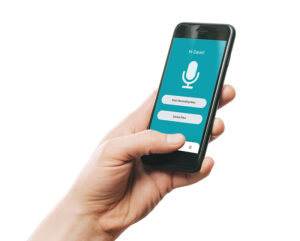
Speech-to-text tools are now widely used across many industries. They are quick, easy to access and, in many cases, already built into the devices people use every day. On the surface, they seem like an obvious way to speed up report writing. But when it comes to survey reports, accuracy is what really matters and that is where things need a closer look.
Where Speech-to-Text Works Well
To be fair, speech-to-text does have its place.
It works well for:
- Quick notes
- Internal messages
- Short, informal content
If you are capturing a rough idea or sending a quick update, it can be very useful. You speak, it types and you move on.
The problem starts when the content becomes more detailed, more technical and more important.
Where Accuracy Becomes a Problem
Survey reports are not simple documents. They rely on detail, structure and correct terminology and this is where speech-to-text can struggle.
Technical terminology
Property reports are full of specific language. Terms like “dilapidations”, “cornicing” or “Artex” are not always recognised correctly.
Even when the words are close, they are not always right and in a professional report, close is not good enough.
Numbers and measurements
Numbers are another common issue.
Something like:
- 15,000 vs 50,000
- 13 vs 30
can easily be misheard. These are not small errors. They can completely change a valuation!
Real-world conditions
Most dictation does not happen in a quiet office.
Surveyors are often:
- On-site
- Outdoors
- Moving between locations
Background noise, wind, and distance from the microphone all affect how well speech-to-text performs. What sounds clear to you does not always translate clearly into text. We can't always hear it either, but we will give it a very good go!
The Hidden Risk in Survey Reports
The biggest issue is not always obvious mistakes. It is the subtle ones.
A report can look fine at first glance, but when you read it properly, small errors start to appear. A wrong word here, a missing phrase there. Over time, this affects the overall quality of the document.
Your reports are client-facing. They represent your work and your professionalism. Accuracy is not something you can afford to compromise on.
Time Cost vs Time Saved
Speech-to-text is often seen as a time-saving tool.
In reality, the process usually becomes:
- Dictate
- Read through
- Correct errors
- Fix formatting
By the time you have finished, the time saving is not always there.
With professional transcription, the process is simpler:
- Dictate
- Send
- Receive a completed document, formatted into your template and ready to send.
The difference is not just speed, it is how much extra work is required afterwards.
If you are weighing up where your time is best spent, it is worth reading Fee Earner or Typist? to see how quickly typing and correcting can add up.
We see quite a few clients using speech-to-text for the first draft and then sending it to us to turn into a properly formatted document. It works well that way.
A Practical Approach
For many surveyors, the best approach is not choosing one or the other.
Speech-to-text can still be useful for:
- Quick notes
- Early drafts
- Brief emails
But for structured, client-ready reports, professional transcription provides the accuracy and consistency needed.
If you want a clearer picture of how this works in practice, see What Is Audio Transcription for Chartered Surveyors.
Speech-to-text has improved, will continue to improve and can be a useful tool in the right situation, but for reports, where detail, structure and accuracy matter, it is not always enough on its own.
A professionally typed, clear, well-formatted document that is ready to send will always save more time in the long run.